

Seed Cache Collection Crew
The details that build seed resilience!
Why Create a Seed Inventory?
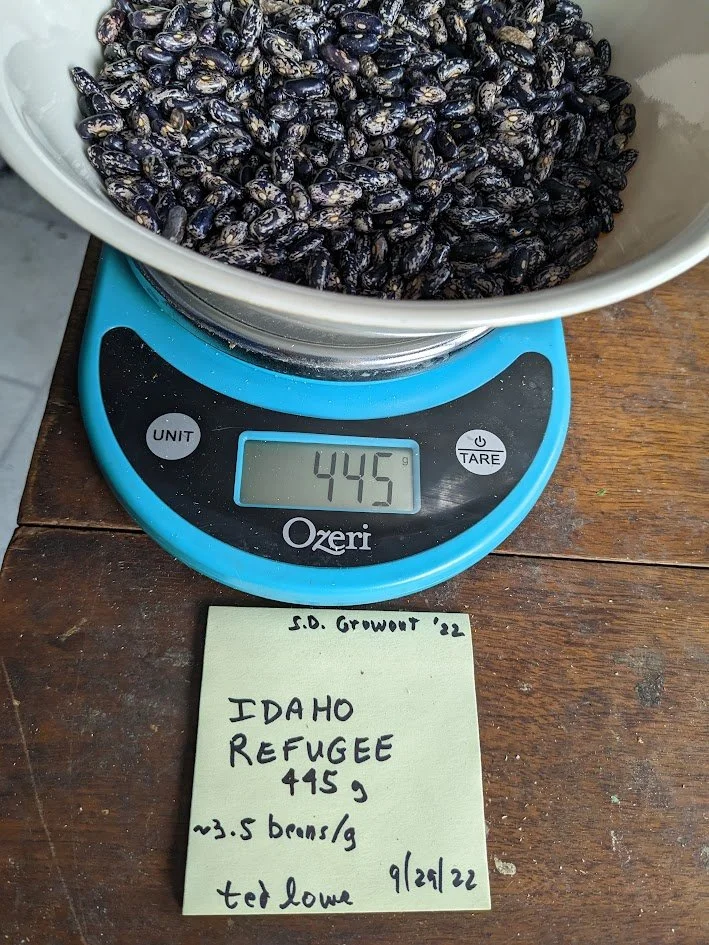
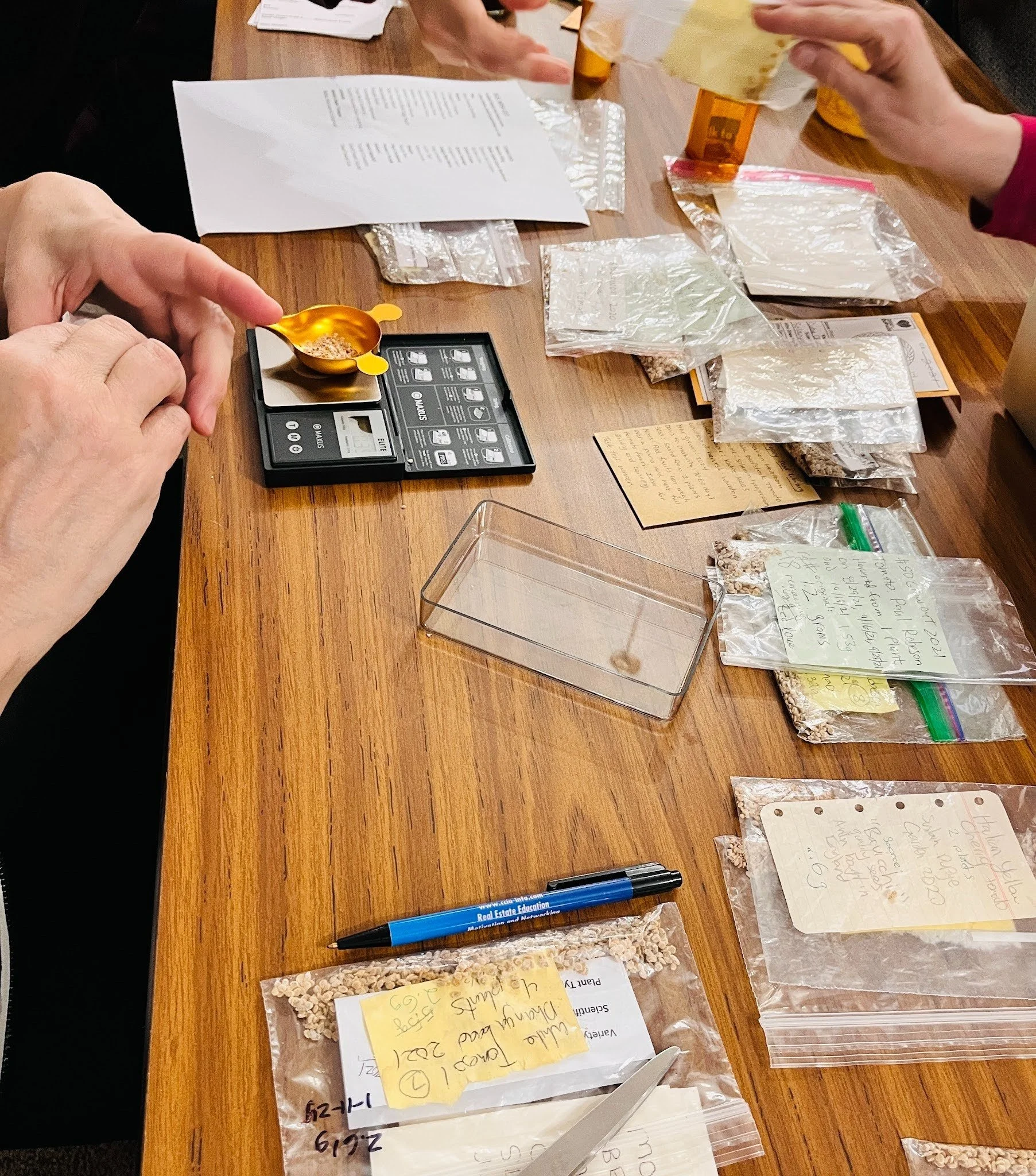
Seed collection requires us to track and organize various types of information. We track details to help growers make selections, as well as produce data that helps us plan how to refresh and expand our collection.
Inventory Crew Purpose
We use our inventory information to plan and support our other efforts:
Identify crops we need our Grow Out Crew to refresh due to seed age or high demand
Select varieties we have an abundance of for redistribution at our swaps, for other local allies, or for the Food Security Squad.
Crop planning at our communal garden - we aim to use our seed stock for a majority of our pea, bean, lettuce, and tomato crops, thereby reducing our costs and increasing our seed resilience.
We are currently researching ways to improve our catalog and inventory processes.
Inventory Day!
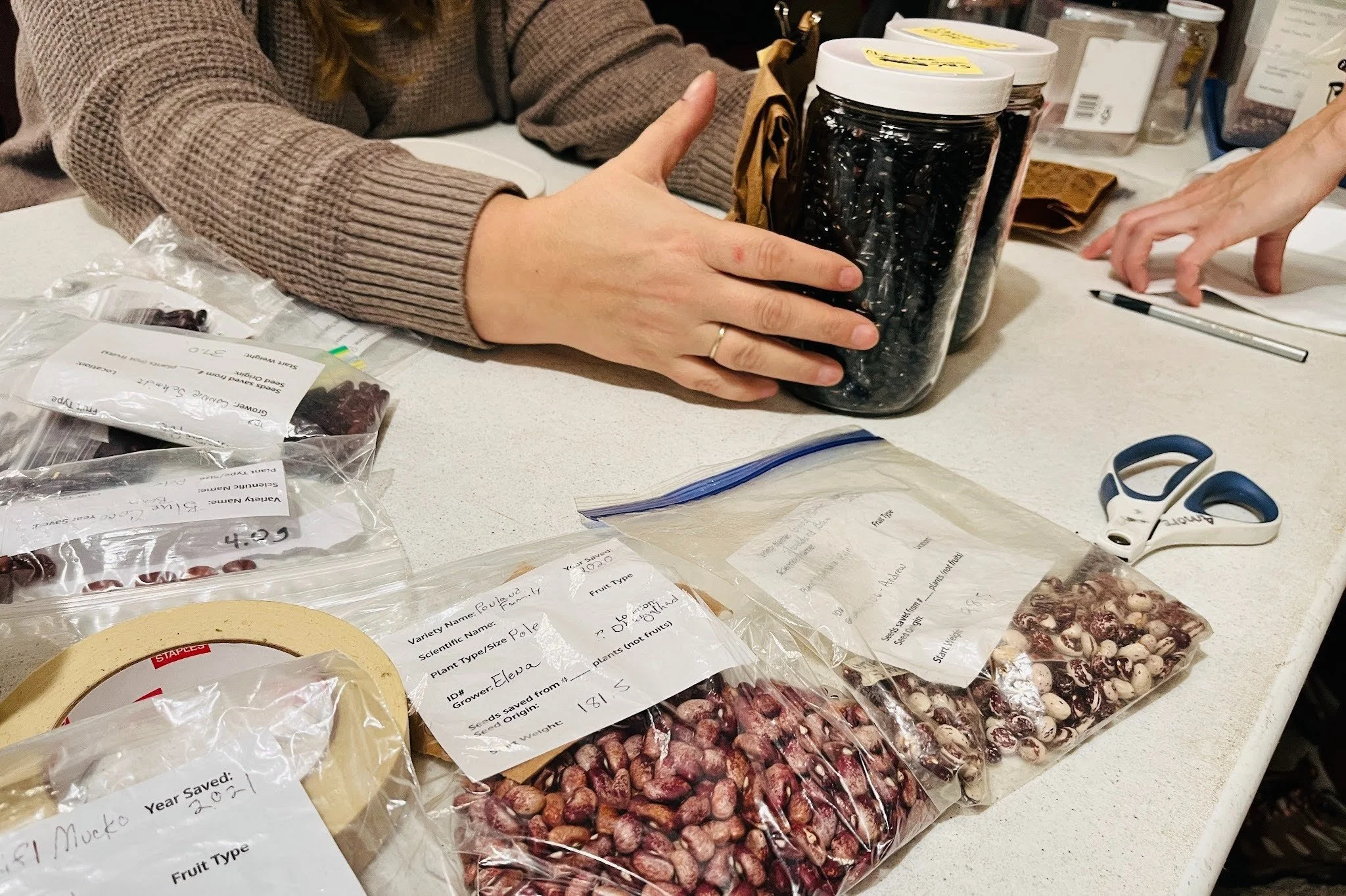
Each November, we put out a call for a larger group of volunteers to help us check the weights and labels of the seeds in our collection. This is a great way to learn more about seed saving on the data side! We like to make this a community event and provide lunch to our Inventory Day volunteers.
Tasks include
Data entry: Navigating our spreadsheet and typing information into it
Researchers: Looking up missing information, primarily using laptops
Labelers: Writing clearly on our seed label form
Handlers: Unpacking seeds to weigh them on a scale, and repackaging them with new ones
Subscribe to our newsletter to be the first to hear details for our next Inventory Day, and join us!
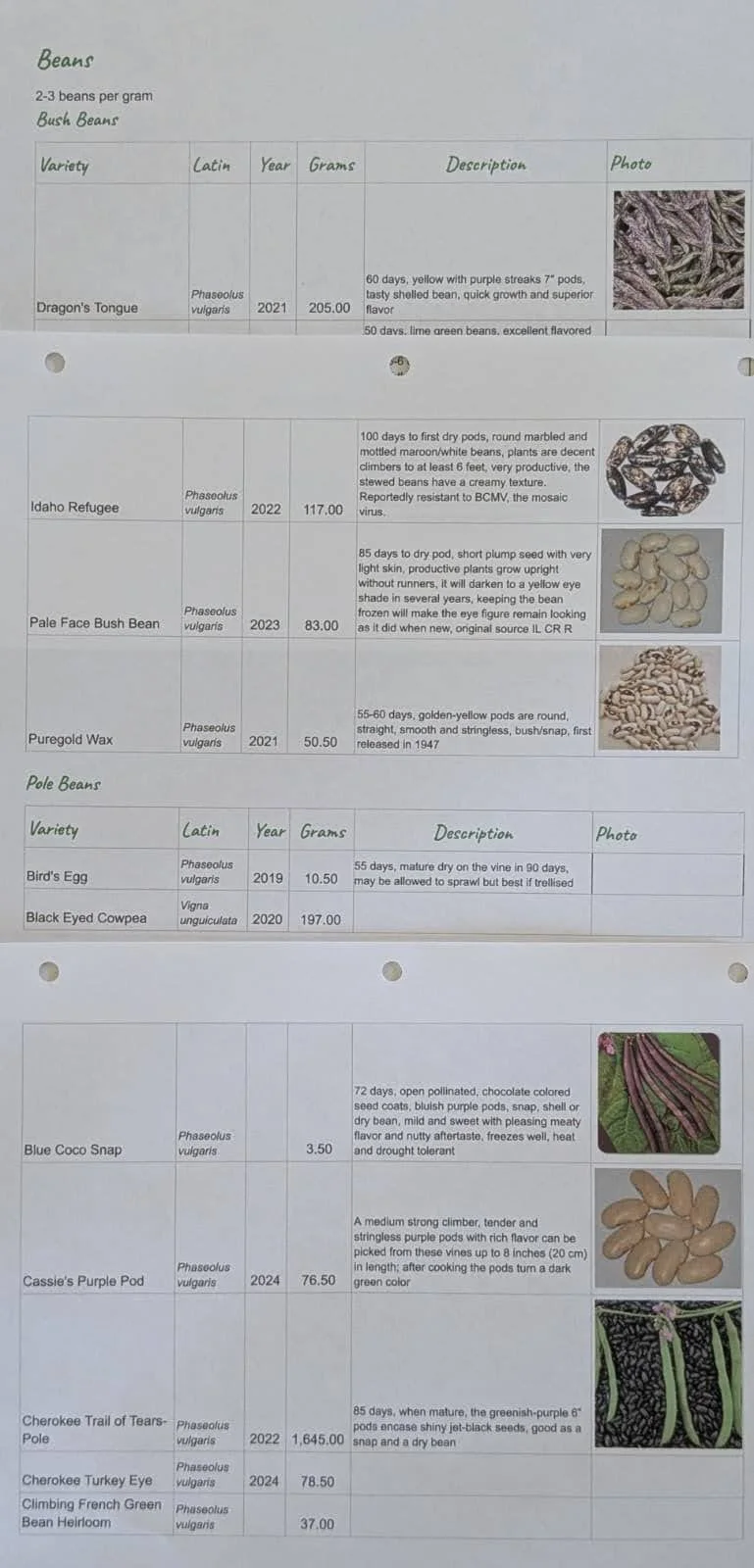
Seed Cache Catalog
The best way to support our seed collection is to use it! A perk of Sustain DuPage membership is gaining access to our Seed Cache catalog. You aren't required to save and return seed from what you grow from our collection, but you are welcome to. We do encourage you to build out your own seed collection, and using our seeds is a great way to start.
A team of volunteers helps translate our inventory information into a viewable catalog to help members make their selections. Whether you are a photographer, a data wizard, or a design aficionado, you can help!
We are currently exploring new ways of doing this!
Building Your Own Seed Cache!
Multiple seed collections or sources within a community help build communal resiliency and seed sovereignty! And having your own seed collection assures you have access to your favorites year after year. Growing out your own saved seed each year can actually improve the quality of the seed stock in your collection.
Grow
Garden as you usually would - whether you are growing for beauty, utility, abundance, or pleasure, pay attention to what plants you are drawn to, or what has nourished you throughout the growing season!
Collect
Garden as you usually would - whether you are growing for beauty, utility, abundance, or pleasure, pay attention to what plants you are drawn to, or what has nourished you throughout the growing season!
The more plants you can collect from, the better - saving seeds from multiple plants ensures genetic stability as you save seeds year after year!
Learn seed saving skills through our various public programs, or through the resources we've shared here, and please reach out for help!
Track
Plant Type: indeterminate tomato
Helps with garden planning and set-up, and can clarify what spacing or trellising might be required for plant health
Latin name: solanum lycipersicum
Helps with garden planning and pollination control
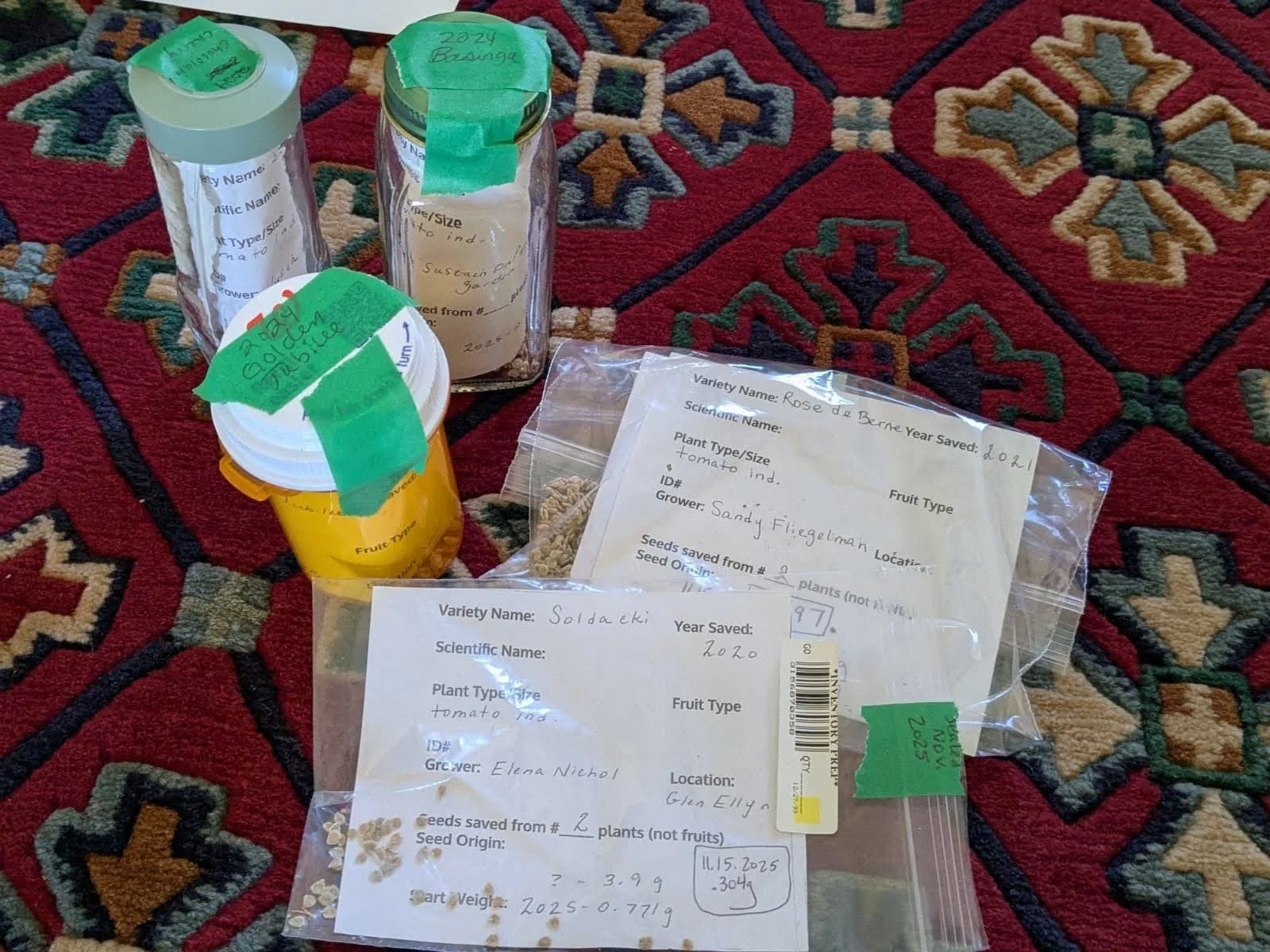
Seed variety name: Rose de Berne tomato
Seed source: SD Seed Cache
Grower: Your name!!
Year collected: 2026
Location collected: Your garden! & town
# plants: 5 tomato plants
Weight: 5 grams
Knowing how much seed you have collected helps you to plan your garden and any seed swap contributions you may be able to offer!
Store
Containers
Use what you have, such as medicine or spice jars or Ziploc baggies.
Unless your larger container seals well, we do not recommend storing in paper as humidity changes may affect the longevity and viability of the seed long term.
Keep your seeds as cool and dry as possible. Some possible storage options include:
A shoebox in the back of a cool, dry closet
A shelf in a cool, dry basement
Some seeds, like lettuce, may do better in the crisper drawer of your fridge in a well-sealed container
We do not recommend using a freezer- any remaining moisture plus freezing MAY crack a seed.