

DuPage History
Learn about the history of DuPage County!

Early History of the DuPage River Valley
Archaeological evidence indicates that humans first arrived in the DuPage region around 10,000 BC. Early inhabitants were hunter-gatherers who traveled across the landscape in pursuit of large game.
By the 17th century, the DuPage River Valley served as hunting grounds for indigenous peoples. Tribes such as the Illiniwek, the Potawatomi, and the Iroquois inhabited the area.
The land between the East and West branches of the DuPage River was known as “Asauganakiing,” meaning “gathering place,” likely referring to seasonal gatherings or the region’s abundant natural food sources.
European Settlement
In 1816, the Treaty of St. Louis transferred land from the Ottawa, Ojibwe, and Potawatomi, which were collectively known as the Council of the Three Fires, to the United States. Although the treaty recognized Indigenous rights to hunt, fish, and gather resources, the expansion of European-style land ownership and agriculture significantly altered the region’s ecosystems and land use.
In 1833, leaders of the Council of the Three Fires were called to a meeting along the Chicago River and ultimately signed a treaty ceding their remaining lands in the region. Soon after, Indigenous communities were forced west of the Mississippi River.
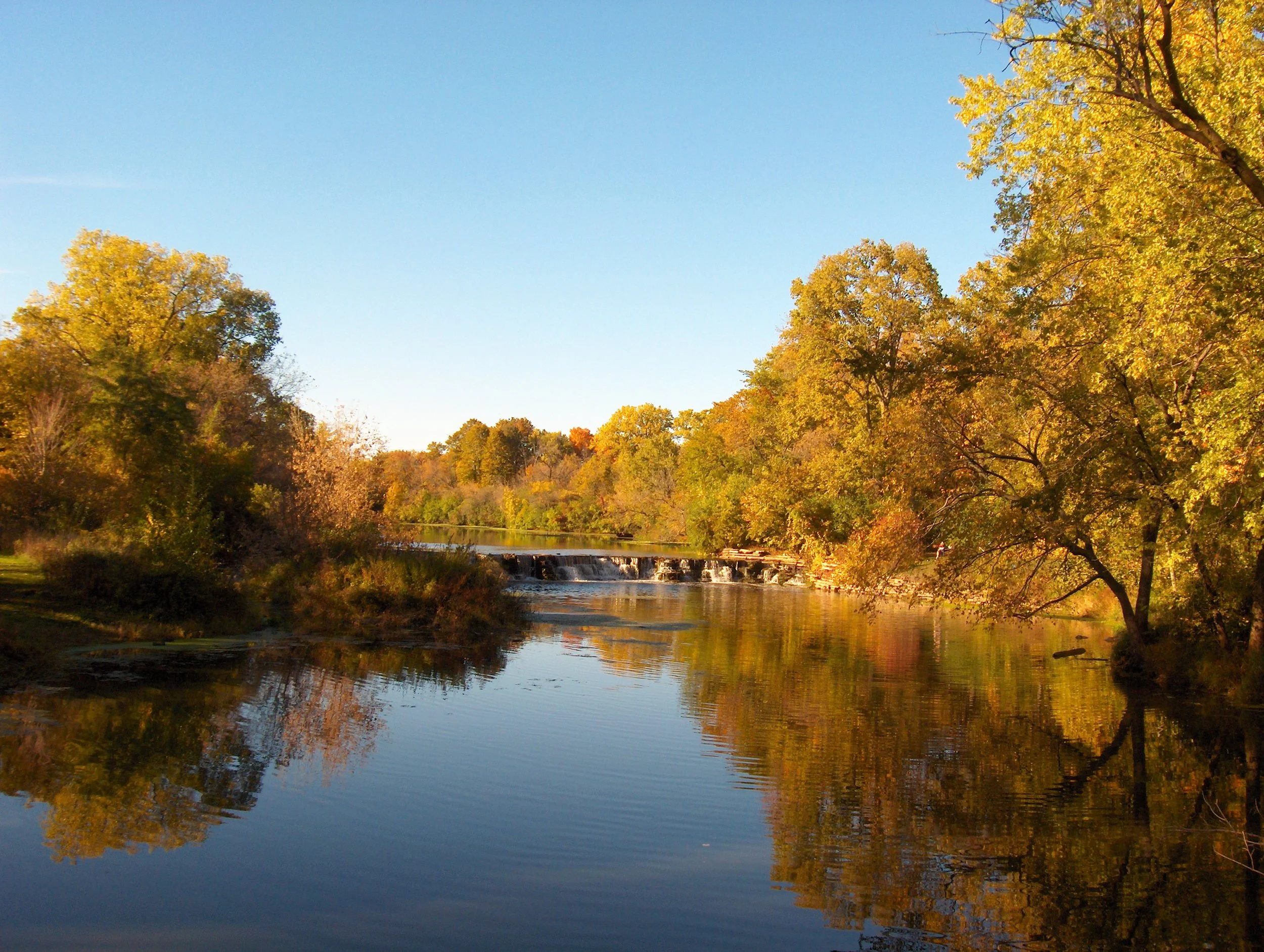
By Neatpete86 at English Wikipedia - Transferred from en.wikipedia to Commons., Public Domain, https://commons.wikimedia.org/w/index.php?curid=1863565
DuPage County and the Modern Day
DuPage County was established in 1839 from portions of Cook County and was named after the DuPage River. As the county developed throughout the nineteenth century, it became connected to broader social, scientific, and cultural movements.
In 1953, brick mason and contractor Nathaniel Odom moved to Wheaton but was unable to find housing due to racial discrimination. He built his own home and later partnered with William Alexander to establish the DuPage chapter of the NAACP. In 1967, Wheaton adopted the first Fair Housing Ordinance in Chicago’s western suburbs after a proposal by Claude Audley, marking an important step toward equitable housing practices.

Sustain DuPage Today
Sustain DuPage was founded with the vision of creating a socially, environmentally, and economically sustainable DuPage County. The organization’s origins trace in part to Get Your Feet Wet DuPage, a community art and engagement project initiated by Andrew Van Gorp in 2013. Sustain DuPage later received official 501(c)(3) nonprofit status in 2016.
Since we’ve begun, our scope has evolved to better meet diverse needs and interests, and we continue to find ways to involve volunteers at all levels to address sustainability needs. Whether you earn 100 hours a year or just want to read the newsletter, Sustain DuPage is a place to contribute and to learn!
Check out our Focus Areas to see what the modern Sustain DuPage is up to!